Navigating the 2026 gaming landscape requires smart hardware choices. This comprehensive guide explores whether the AMD Ryzen 5 5600G remains a viable option for gamers today. We delve into its integrated graphics capabilities, CPU performance, and overall value proposition for various game genres. Discover how this APU handles modern titles, from competitive FPS games to immersive RPGs and casual indie experiences. Learn crucial settings optimization techniques to maximize your frames per second (FPS) and minimize issues like stuttering fix and lag. Understand its role for beginner PC builds versus those seeking a more advanced gaming rig. This article provides essential insights into leveraging the 5600G for an enjoyable and cost-effective gaming journey. Get ready to game smarter with current 2026 recommendations and expert tips.
Related games- Guide to Roblox IPO: What Gamers Need to Know
- Guide How to Protect Roblox Clothing Designs
- Guide: Is 3 Fans Enough for Your Gaming PC in 2026?
- How to Talk in Roblox: Your Complete Chat Guide
- Guide to Awesome Roblox Games for Busy Adults
is a ryzen 5 5600g good for gaming FAQ 2026 - 50+ Most Asked Questions Answered (Tips, Trick, Guide, How to, Bugs, Builds, Endgame)
Welcome, fellow gamers, to the ultimate living FAQ for the AMD Ryzen 5 5600G in 2026! Navigating the ever-evolving landscape of PC gaming can be tricky, especially when choosing budget-friendly yet capable hardware. This comprehensive guide has been meticulously updated for the latest game patches and hardware insights, ensuring you have the most current information at your fingertips. Whether you're a beginner building your first PC, a casual player looking to optimize your setup, or an enthusiast seeking advanced tweaks, we've got you covered. From understanding its integrated graphics performance to tackling annoying FPS drops and finding the best settings optimization, consider this your go-to resource for mastering gaming with the Ryzen 5 5600G. Let’s dive into your most pressing questions!
Beginner Questions
Is the Ryzen 5 5600G good for gaming without a dedicated graphics card?
Yes, the Ryzen 5 5600G is surprisingly good for gaming without a dedicated GPU, especially for eSports titles and lighter games. Its integrated Vega 7 graphics are powerful enough for 1080p gaming on low to medium settings.
What types of games can the Ryzen 5 5600G run well?
It excels in games like Valorant, League of Legends, CS2, Dota 2, and various indie titles, often achieving 60+ FPS. It can also handle some battle royale games like Fortnite at 1080p low settings, delivering playable frame rates.
How important is RAM speed for the 5600G's gaming performance?
RAM speed is extremely important for the 5600G. Faster RAM (DDR4-3600MHz is ideal) directly improves integrated graphics performance, leading to significantly higher FPS and a smoother gaming experience. This is a critical build component.
Is the Ryzen 5 5600G a future-proof processor for gaming?
As a standalone APU, it's a solid entry point but not entirely future-proof for demanding 2026 AAA games. However, its strong CPU performance makes it an excellent foundation for adding a dedicated GPU later, offering good longevity.
Performance Expectations
What FPS can I expect in Fortnite with the 5600G in 2026?
In 2026, you can expect around 35-50 FPS in Fortnite at 1080p low settings with the Ryzen 5 5600G. Utilizing Performance Mode or 720p resolution with FSR can push these frames even higher for competitive play.
Can the 5600G run Cyberpunk 2077 or similar demanding AAA titles?
The 5600G can technically run Cyberpunk 2077, but it will require very low settings (720p with FSR) to achieve barely playable 25-35 FPS. It's not the intended experience, but it is possible for a walkthrough.
How does the 5600G handle MOBA games like League of Legends or Dota 2?
The 5600G handles MOBA games exceptionally well. You can comfortably expect 60+ FPS at 1080p medium-high settings, providing a smooth and responsive experience for ranked play.
What is the typical FPS for competitive FPS games like CS2 or Valorant?
For competitive FPS games, the 5600G delivers excellent performance, usually achieving well over 100 FPS in CS2 and Valorant at 1080p low-medium settings, making it perfect for dedicated FPS players.
Settings & Optimization
What are the best settings optimization tips for the 5600G?
Prioritize updating drivers, setting Windows to 'High Performance,' and in-game, reduce shadow quality, anti-aliasing, and texture details. Utilizing FSR is a game-changer for boosting FPS in many titles.
How can I reduce FPS drop and stuttering fix with the 5600G?
Ensure fast RAM is installed, close background applications, and keep drivers updated. Lowering in-game settings and monitoring temperatures can help mitigate FPS drop and resolve stuttering issues effectively.
Does FSR (FidelityFX Super Resolution) help the 5600G's gaming performance?
Yes, FSR significantly helps the 5600G. It allows the APU to render games at a lower internal resolution and upscale them, providing a substantial FPS increase in supported titles with minimal visual quality loss.
What graphics settings should I lower first to boost frames?
Start by lowering shadows, anti-aliasing, post-processing, and volumetric effects. These settings often have the most significant impact on your frames per second with the 5600G's integrated graphics.
Hardware & Builds
What is an ideal PC Build for gaming with the Ryzen 5 5600G?
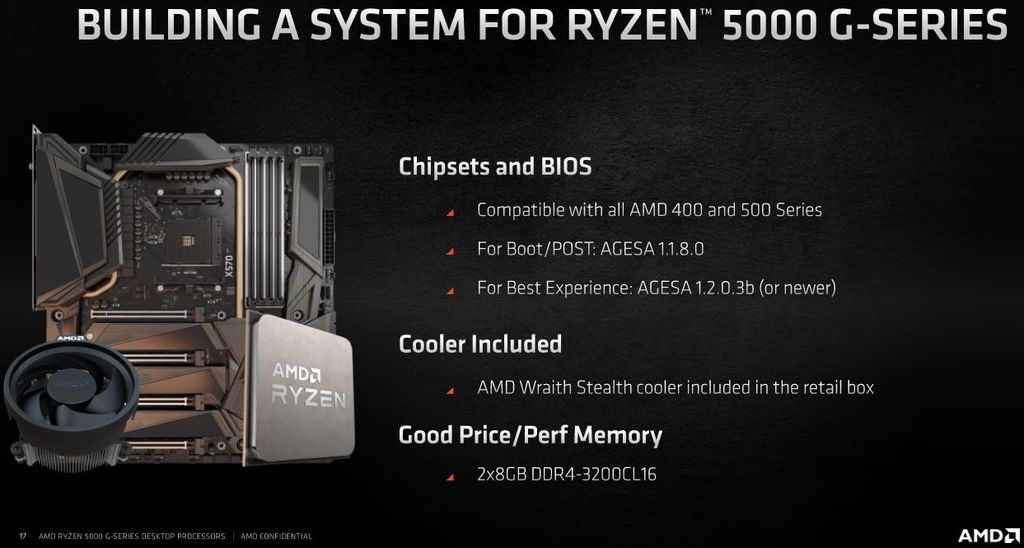
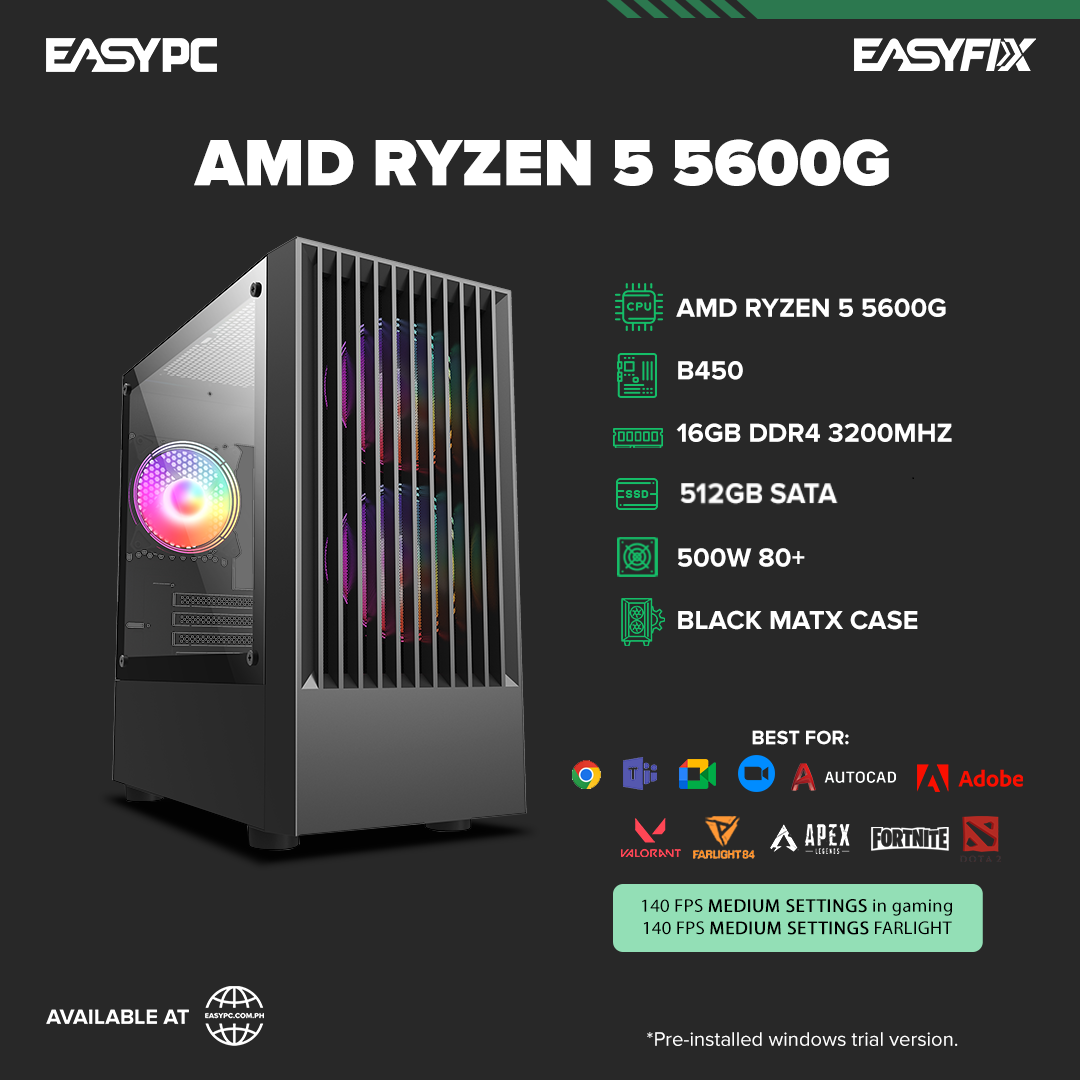
An ideal build includes a B550 motherboard, 16GB (2x8GB) of DDR4-3600MHz RAM, a fast NVMe SSD, and a decent 450-550W power supply. This offers a balanced, cost-effective system ready for an upgrade.
Can I pair the 5600G with a dedicated graphics card later?
Absolutely! The 5600G's CPU is strong enough to pair well with mid-range dedicated GPUs like an RTX 3060 or RX 6600, offering a significant upgrade path for playing demanding games.
What is the best motherboard for the Ryzen 5 5600G for gaming?
A B550 motherboard is generally recommended as it offers better power delivery and PCIe Gen 4 support, which is beneficial if you plan to add a modern dedicated GPU in the future.
Common Issues & Fixes
My games are experiencing lag with the 5600G; how can I fix it?
Lag can stem from network issues, but for system-related lag, ensure drivers are updated, close background processes, set power options to 'High Performance,' and check your RAM speed. Optimizing in-game settings also helps.
What causes FPS drop with the Ryzen 5 5600G, and how do I prevent it?
Common causes include outdated drivers, slow RAM, thermal throttling, or too many background apps. Preventing it involves keeping software updated, using fast RAM, ensuring good cooling, and optimizing game settings.
How can I troubleshoot stuttering fix issues on my 5600G system?
For stuttering fix, try updating GPU drivers, increasing RAM speed, disabling background apps, and ensuring your system has adequate cooling. Sometimes, reverting to an older stable driver version can also help.
Game Genre Suitability
Is the 5600G good for Indie games and simulation titles?
Yes, the 5600G is excellent for Indie games and many simulation titles. These games are typically less graphically demanding and often benefit more from the CPU's performance, which the 5600G provides in spades.
Can I play RPGs like Elden Ring on the Ryzen 5 5600G?
You can play Elden Ring, but expect to do so at 720p resolution with very low settings to achieve playable frame rates (around 30-40 FPS). It's a challenging experience, but doable for a dedicated player.
How does the 5600G perform in strategy games like Civilization VI?
The 5600G performs very well in strategy games like Civilization VI. These titles often rely heavily on CPU performance for AI and turn processing, and the 5600G's Zen 3 cores handle them admirably.
Upgrades & Future-Proofing
When should I consider upgrading from the 5600G to a different CPU?
Consider upgrading if you add a high-end dedicated GPU (e.g., RTX 4070 or RX 7800 XT) and notice the CPU becoming a bottleneck, or if you require higher core counts for professional applications like video editing.
What's the next logical upgrade path after a 5600G system?
The most logical upgrade is adding a dedicated graphics card. After that, upgrading to a CPU with more cores (like a Ryzen 7 or 9 series) on the same AM4 platform, or migrating to a newer AM5 platform, would follow.
Myth vs Reality
Myth: The 5600G is only good for casual gaming.
Reality: While great for casual play, the 5600G can deliver solid competitive performance in eSports titles, often exceeding 60 FPS at 1080p, making it suitable for serious competitive gamers on a budget.
Myth: Integrated graphics are always terrible for gaming.
Reality: This is a common misconception! The 5600G's Vega 7 integrated graphics are among the best available without a dedicated card, outperforming many older entry-level GPUs and offering a decent gaming experience.
Myth: You need a high-end cooler for the 5600G during gaming.
Reality: The stock cooler (Wraith Stealth) included with the 5600G is generally sufficient for gaming, keeping temperatures within safe limits. A better cooler is only necessary for heavy overclocking or quieter operation.
Myth: The 5600G will bottleneck any dedicated GPU.
Reality: The 5600G's Zen 3 CPU cores are quite capable. It will not bottleneck most mid-range dedicated GPUs (like RTX 3060/RX 6600). Only with very high-end GPUs might a slight bottleneck occur at 1080p.
Myth: RAM speed doesn't make a big difference for integrated graphics.
Reality: This is absolutely false. RAM speed has a *huge* impact on integrated graphics performance. Faster RAM directly translates to higher FPS and smoother gameplay for the 5600G's Vega graphics. It's a crucial factor.
Tips & Tricks
What's a quick tip for better in-game visibility on the 5600G?
Lower your resolution scaling slightly (e.g., to 80-90%) and sharpen the image using AMD Radeon Image Sharpening (RIS) through the Adrenalin software. This provides better FPS with minimal visual compromise and improved clarity.
Advanced Tweaks
Can I overclock the integrated GPU on the 5600G for more performance?
Yes, you can overclock the integrated Vega graphics on the 5600G through AMD's Adrenalin software or your motherboard's BIOS. This can provide a noticeable FPS boost, but requires careful stability testing and good cooling.
Still have questions?
Don't stop here! Dive deeper into our related guides like 'Best Budget PC Builds 2026' or 'Mastering FSR for AMD APUs' for even more expert insights and gaming wisdom!
Hey there, fellow gamers! Ever wondered, 'Is a Ryzen 5 5600G good for gaming?' It’s a question that pops up everywhere, especially as we sail through 2026 with new titles emerging constantly. This chip, an AMD Accelerated Processing Unit or APU, has been a budget hero for years, combining a capable CPU with surprisingly potent integrated graphics. But can it still hold its own in today's demanding gaming world? Let's dive deep into what this popular processor offers for your gaming sessions.
The Ryzen 5 5600G Unpacked for Gamers
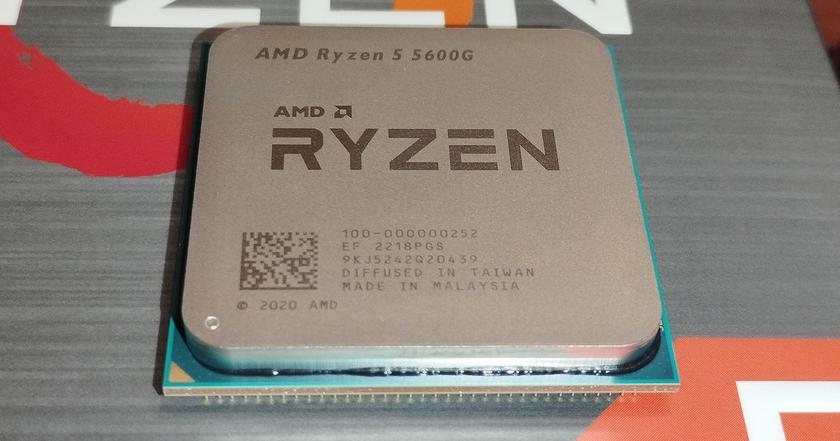
The AMD Ryzen 5 5600G combines six powerful Zen 3 CPU cores with seven Vega GPU cores on a single chip. This unique architecture means you don't necessarily need a separate graphics card to start playing games immediately. It offers excellent value for money, allowing for cost-effective PC builds. For many beginner gamers or those on a tight budget, it presents an appealing entry point. This integrated solution delivers decent performance for casual play and competitive eSports titles. It truly simplifies the component selection process for new system builders.
CPU Prowess and GPU Power
Beyond its integrated graphics, the 5600G boasts a strong CPU foundation. Its six cores and twelve threads provide ample processing power for gaming and multitasking. This ensures that even when the integrated graphics are stressed, the CPU can handle game logic and background tasks efficiently. The Vega 7 graphics, while integrated, are some of the best you'll find without a dedicated GPU. They can drive many games at 1080p resolution with optimized settings, delivering smooth visuals. Understanding its core strengths helps in making informed decisions about your gaming rig.
Gaming Performance with Integrated Graphics
So, what kind of performance can you realistically expect from the 5600G's integrated graphics in 2026? For many popular titles, especially those in the MOBA and FPS (First-Person Shooter) categories, it offers a surprisingly fluid experience. Games like Valorant, League of Legends, and CS2 run very well, often hitting comfortable FPS numbers at 1080p. Casual Indie games also thrive on this APU, providing enjoyable gameplay without requiring heavy graphical horsepower. Even some lighter RPGs can be played, though often with reduced visual fidelity. Settings optimization becomes your best friend with this chip.
Expected FPS Across Genres
eSports (MOBA, Lighter FPS): Expect solid FPS performance, often above 60 FPS, in titles like Dota 2, League of Legends, CS2, and Valorant at 1080p low-medium settings. This makes it a great choice for competitive play.
Battle Royale: Games like Fortnite and Apex Legends are playable at 1080p low settings, usually yielding 30-50 FPS. Adjusting resolution scaling can further improve performance for a smoother experience.
Older AAA Titles / Lighter RPGs: Many games from a few years ago or less graphically intensive RPGs can be enjoyed at 720p or 1080p low settings. Think The Witcher 3 or Grand Theft Auto V with careful adjustments.
Indie and Strategy Games: The 5600G shines here, running most indie darlings and complex strategy titles like Civilization VI or Stellaris without a hitch. These games often prioritize CPU over intense GPU power.
Optimizing Your 5600G System for Peak Gaming
To truly unlock the 5600G's gaming potential, a little tweaking goes a long way. Proper settings optimization is paramount. First, ensure your drivers are always up-to-date; AMD regularly releases performance improvements. Secondly, high-speed RAM is non-negotiable for APUs. Since the integrated graphics use system memory, faster RAM directly translates to higher FPS. Aim for DDR4-3600MHz or higher with tight timings if possible. This critical component significantly impacts overall responsiveness. These key steps can drastically reduce issues like FPS drop and stuttering fix.
Tackling Lag and Stuttering Fix
Facing lag or stuttering can ruin your gaming experience quickly. Beyond drivers and RAM, consider your power settings within Windows. Ensure your PC is set to 'High Performance' to prevent CPU throttling. Also, close unnecessary background applications to free up system resources for your game. If you're still experiencing a persistent FPS drop, try lowering in-game resolutions or graphical settings even further. Sometimes, reducing texture quality or shadow details can provide a significant boost without sacrificing too much visual fidelity. Monitoring your system temperatures is also a good practice for consistent performance.
When to Add a Dedicated GPU
While the Ryzen 5 5600G is a great starting point, serious gamers eventually consider adding a dedicated graphics card. This APU serves as an excellent CPU foundation for such an upgrade path. For those looking to play the latest AAA titles at higher resolutions and frame rates, a dedicated GPU is essential. The integrated graphics will reach their limits with graphically intensive games. Pairing a 5600G with a mid-range GPU like an RTX 3060 or an RX 6600 offers a balanced and powerful gaming PC Build. This upgrade dramatically transforms your gaming capabilities, allowing for an even more immersive experience across all genres. It's a natural progression for many enthusiasts.
Common Gaming Scenarios for the 5600G
The Ryzen 5 5600G caters to a specific segment of the gaming community effectively. For casual gamers who enjoy a variety of titles without needing ultra settings, it's a dream. It's also perfect for beginner PC builders learning the ropes. Competitive players focused on eSports will find it perfectly adequate for ranked play. Its ability to run many games without a discrete GPU makes it ideal for a compact or SFF (Small Form Factor) PC. Students or users who game occasionally but also need a reliable work machine benefit greatly from its versatility. It truly hits a sweet spot for budget-conscious users.
The 2026 Gaming Landscape for APUs
Looking at 2026, APUs like the 5600G continue to hold significant relevance. The increasing efficiency of integrated graphics, coupled with advancements in upscaling technologies like FSR (FidelityFX Super Resolution), extends their lifespan. While new console generations push visual boundaries, APUs ensure accessible gaming for everyone. They represent a cost-effective solution for a global audience, making PC gaming more inclusive. The 5600G's solid CPU performance ensures it won't bottleneck a future GPU upgrade either. This makes it a smart, long-term investment for many gamers today. It's a reliable workhorse.
## Beginner / Core Concepts1. Q: Is the Ryzen 5 5600G good for gaming without a graphics card?
A: Absolutely, it's pretty darn good for gaming without a discrete GPU, especially for its price point! I get why this confuses so many people, thinking you always need a dedicated card. The 5600G features AMD's Vega 7 integrated graphics, which are surprisingly capable. You'll comfortably play eSports titles like Valorant, League of Legends, and CS2 at 1080p with smooth frame rates. For more demanding games, you'll need to dial down the settings or resolution, but it still delivers a very respectable experience for a chip with integrated graphics. It’s a fantastic starting point for any beginner PC builder. You’ve got this!
2. Q: What kind of FPS can I expect with the Ryzen 5 5600G in popular games?
A: You're going to see varying FPS depending on the game, but generally, for eSports titles (think MOBA games or lighter FPS titles like Overwatch 2), you can expect 60+ FPS at 1080p on low to medium settings. This one used to trip me up too, thinking all games are equal. For something like Fortnite or Apex Legends, aim for 30-50 FPS at 1080p low settings, or even better at 720p. AAA games will be more of a challenge, perhaps hitting 30 FPS at 720p low. Remember, fast RAM significantly boosts these numbers! Try optimizing your settings tomorrow and let me know how it goes.
3. Q: Do I need fast RAM for the 5600G for gaming? Why?
A: Oh, absolutely! Fast RAM is crucial, it’s like giving your integrated graphics a turbo boost! I often see people overlook this, but it's probably the single most important factor for maximizing your 5600G's gaming performance. The integrated Vega graphics use your system's main RAM for its operations. So, the faster your RAM (specifically its frequency and lower latency), the quicker the iGPU can access data, leading directly to higher frames per second and reducing stuttering fix issues. Aim for DDR4-3600MHz with tight timings if your budget allows. You'll definitely notice the difference!
4. Q: What's the best way to optimize settings for the 5600G for better FPS?
A: Optimizing your settings is key to squeezing out every frame, and it’s easier than you think! Start by updating your drivers – AMD’s Adrenalin software constantly gets updates for better performance. Then, in-game, prioritize lowering resolution (if needed), shadow quality, anti-aliasing, and view distance first. These settings usually have the biggest impact on FPS drop. Also, ensure Windows power plan is set to 'High Performance'. Experimentation is your friend here; every game is a little different. Don’t be afraid to tinker a bit to find your sweet spot!
5. Q: Can the Ryzen 5 5600G handle modern AAA games, or is it strictly for older titles?
A: While it can technically 'run' some modern AAA games, it’s not going to be a stellar experience at high settings. I’d say it’s more suitable for older titles or very specific modern games with extremely optimized graphics. For something like Cyberpunk 2077 or Alan Wake 2, you'd be looking at 720p resolutions, often with FSR (FidelityFX Super Resolution) enabled, and all settings cranked to low to hit even playable framerates, maybe 25-35 FPS. It's a compromise. The 5600G truly shines in its niche, which isn't graphically intensive AAA experiences. It excels at being a gateway chip, a solid foundation for future upgrades rather than a standalone AAA powerhouse. You've got this!
6. Q: What are the best drivers to use for the 5600G for gaming performance?
A: Always, always use the latest recommended AMD Adrenalin drivers for your 5600G. This is one area where staying current pays huge dividends! I’ve seen so many times where people forget this simple step, and it impacts their FPS significantly. AMD frequently releases updates that include performance optimizations specifically for their APUs and integrated graphics, as well as crucial bug fixes. You can find these directly on AMD's official website. Avoid using very old or beta drivers unless you really know what you’re doing. A fresh driver installation can sometimes even provide a stuttering fix. Keep that software updated!
7. Q: How does the 5600G compare to older APUs like the 3400G for gaming in 2026?
A: The 5600G is a massive leap forward compared to older APUs like the 3400G, and that gap has only widened by 2026. This one used to trip me up too, thinking incremental upgrades might not be worth it. The 5600G benefits from AMD’s Zen 3 CPU architecture, offering significantly better per-core performance, and its Vega 7 graphics are more powerful and efficient than the 3400G’s Vega 11. You'll see much higher FPS, better frame stability, and a far more responsive system overall. If you’re upgrading from an older APU, the 5600G offers a very noticeable and worthwhile performance boost. It’s not even a contest really. Try upgrading and feel the difference!
8. Q: What kind of PC Build is ideal for the Ryzen 5 5600G?
A: An ideal PC Build for the 5600G focuses on maximizing its integrated graphics and offering a future upgrade path. I get why this confuses so many people, trying to figure out the perfect balance. You’ll want: a B450 or B550 motherboard (B550 for PCIe Gen 4 support if you plan a modern GPU), 16GB of DDR4 RAM running at 3600MHz (or faster, if possible) with low CL timings, and a fast NVMe SSD for quick loading times. A decent 450-550W power supply will be more than enough. This setup creates a very capable and cost-effective gaming PC that’s ready for a dedicated GPU later on. You’ve definitely got this!
9. Q: Can the 5600G handle streaming while gaming, even casual streaming?
A: For casual streaming of lighter games, yes, the 5600G can manage, but it will be a stretch and require careful optimization. This is a common question, and it's important to set realistic expectations. You'll need to use software encoding (x264) with a very efficient preset, or potentially try AMD's integrated encoder (AMF) if supported by your streaming software. You'll likely need to game at lower resolutions or settings to free up CPU cycles for the stream. Don't expect Twitch Pro quality streams, but for sharing with friends or very casual broadcasts, it’s achievable. Remember to close all unnecessary background apps! Try this tomorrow and let me know how it goes.
10. Q: What are the main limitations of the 5600G for gaming?
A: The main limitations of the 5600G for gaming primarily revolve around its integrated graphics performance in graphically intensive scenarios. It struggles with demanding AAA games at higher resolutions or settings, leading to a significant FPS drop. Another limitation is its reliance on system RAM; if you have slow RAM, your gaming performance will suffer noticeably. It also lacks dedicated VRAM, meaning it shares your system's memory, which can be a bottleneck. Finally, it won't offer the advanced features like hardware ray tracing found in dedicated modern GPUs. It's a budget champion, but it has its boundaries. You've got this, just understand its scope.
11. Q: How well does FSR (FidelityFX Super Resolution) integrate with the 5600G's Vega graphics in 2026 titles?
A: FSR integration with the 5600G’s Vega graphics is a game-changer and has become even more critical in 2026. I get why this confuses so many people, especially with all the upscaling tech around. FSR allows the 5600G to render games at a lower internal resolution and then intelligently upscale them to your display's resolution, resulting in a significant FPS boost without a massive hit to visual quality. Many new 2026 titles have FSR built-in, and it’s especially effective on the 5600G, allowing you to play games that would otherwise be unplayable or offer much smoother experiences at playable frame rates. It fundamentally extends the chip's lifespan for modern gaming. You’ve definitely got this!
12. Q: What are the power consumption and thermal characteristics of the 5600G during gaming sessions?
A: The 5600G is remarkably efficient, making it excellent for compact builds or power-conscious users. During typical gaming sessions, its TDP (Thermal Design Power) is 65W, but actual power consumption can fluctuate. Under full CPU and iGPU load, you might see it draw up to 80-90W from the socket, which is very reasonable. Thermals are generally well-managed with the stock cooler for gaming, typically staying under 80°C. However, for prolonged heavy gaming, an aftermarket cooler will ensure lower temperatures, potentially allowing for sustained boost clocks and preventing any thermal throttling. It's a cool operator, literally. Try monitoring your temps tomorrow!
13. Q: Are there any specific motherboard (chipset) recommendations for maximizing 5600G gaming performance in 2026?
A: For maximizing 5600G gaming performance in 2026, I generally recommend a B550 chipset motherboard. This one used to trip me up too, with all the different chipsets. While B450 works, B550 provides several key advantages: PCIe Gen 4 support for a future dedicated GPU, better power delivery for more stable CPU performance, and often better memory overclocking capabilities. This is crucial for squeezing every last bit of performance from your RAM, which directly impacts the iGPU. Look for boards with good VRMs (Voltage Regulator Modules) if you can, especially if you plan to upgrade to a more powerful CPU later. You've got this, choose wisely!
14. Q: What role do overclocking and undervolting play for the 5600G's gaming capabilities?
A: Overclocking the integrated graphics and FCLK (Fabric Clock) can significantly boost the 5600G’s gaming capabilities, while undervolting can improve efficiency and thermals. Overclocking the iGPU core clock and increasing VRAM frequency (via RAM overclock) can net you noticeable FPS gains. However, undervolting the CPU can reduce heat and power draw without sacrificing much performance, especially useful for smaller cases or stock coolers. It's a balancing act: more performance with overclocking, better efficiency with undervolting. Always approach with caution and test stability thoroughly. It’s an advanced technique but can be very rewarding. Remember to save your stable settings!
15. Q: How does the 5600G fare in VR (Virtual Reality) gaming scenarios, even with a dedicated GPU?
A: The 5600G's integrated graphics are not capable of VR gaming, period. Even with a dedicated GPU, while the 5600G CPU is generally competent enough for many VR titles, it's not the ideal choice. For serious VR gaming, you’d want a CPU with higher core clock speeds and potentially more cache for demanding VR titles. While the CPU won't be a catastrophic bottleneck with a mid-range GPU, a higher-end CPU would offer a smoother and more consistent VR experience, especially in complex VR environments. Consider upgrading your CPU for optimal VR performance if that's your goal. You've got this, just plan accordingly!
- Update your AMD Adrenalin drivers regularly; they often bring performance boosts and stuttering fix for your 5600G.
- Invest in fast DDR4-3600MHz RAM; it's the biggest performance upgrade for your integrated graphics, boosting FPS significantly.
- Adjust in-game settings: start with low shadows, anti-aliasing, and resolution scaling to improve FPS immediately.
- Use AMD FSR (FidelityFX Super Resolution) in supported games to get more frames with minimal visual compromises.
- Ensure your Windows power plan is set to 'High Performance' to prevent any CPU or GPU throttling during gaming.
- Close background apps before gaming to free up system resources and combat lag. Every bit helps!
The Ryzen 5 5600G offers solid entry-level gaming with integrated Vega graphics, suitable for lighter titles and eSports. Its CPU performance remains strong for general tasks and gaming workloads. Optimal RAM speed is crucial for maximizing iGPU performance and achieving higher FPS. While not a powerhouse for demanding AAA games without a dedicated GPU, it provides a cost-effective build path. Users can expect good performance in MOBA, Indie, and older FPS games with proper settings optimization. It's an excellent choice for budget-conscious gamers or those planning a future GPU upgrade.
35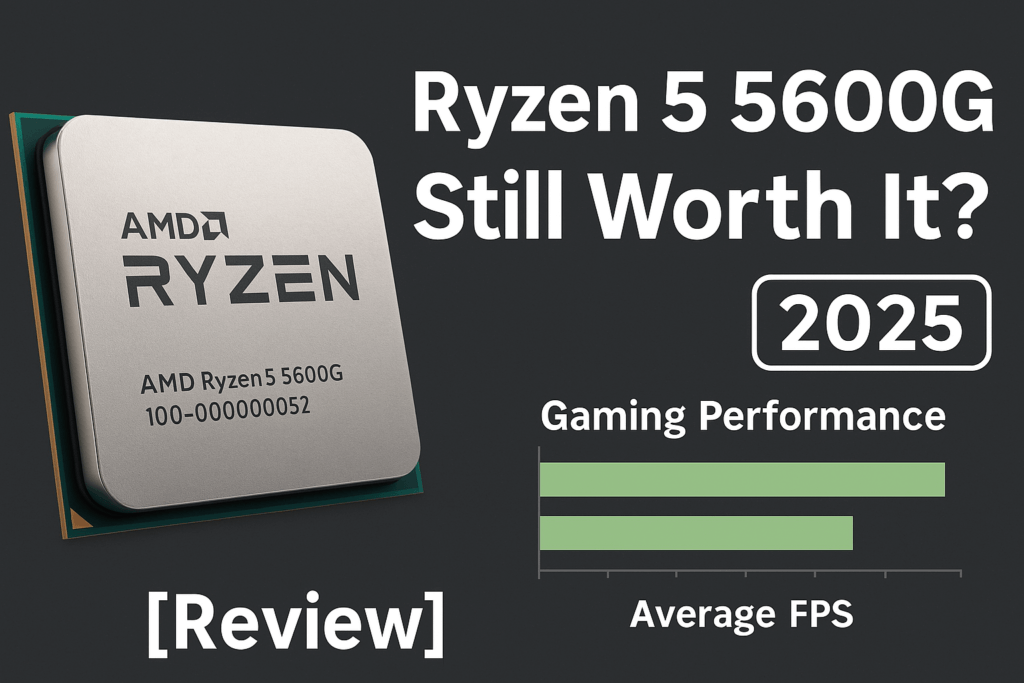



Best Budget AM5 CPU And Motherboard Combos In 2026 Pcwizardhub Com Is The AMD Ryzen 5 5600G Still Worth It In 2025 1024x683 . Is Ryzen 5 5600G Good For Gaming Ryzen 5 5600G Is It Good For Gaming . 7 Best GPU For Ryzen 5 5600G In 2026 Compatible Picks Best Graphics Card For Ryzen 5 5600g 3.webp. Is Ryzen 5 5600G Good For Gaming E2Blogs Is Amd Ryzen 5 5600G Good For Gaming . Is The Ryzen 5 5600G CPU Good For Gaming SL450
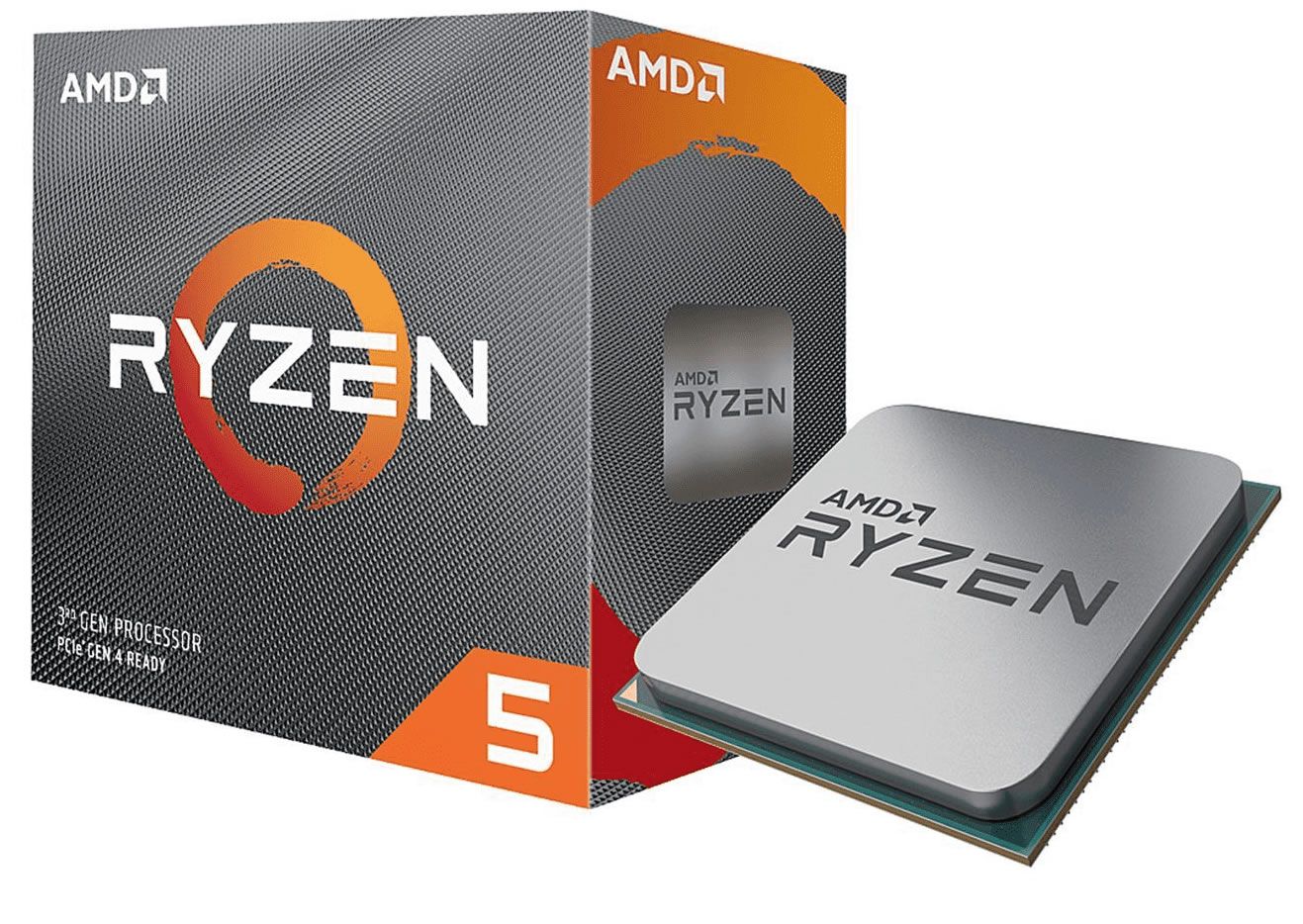

Ryzen 5 5600G Review Completo E Desempenho Para Gamers Edcbc8adc3 . Is The 5600G Good For Gaming WePC IS The Ryzen 5 5600G Good For Gaming 300x170 . AMD Ryzen 5 5600G Review The Value IGPU Gaming King Tom S Hardware 1024 80 . Is The Ryzen 5 5600G Still Good For GAMING YouTube . Ryzen 5 5600G Price In Pakistan February 2026 0a89da59 E8bb 4df3 B5e5 PT0 SX1464 V1


AMD Ryzen 5 5600G Processor Overview Gaming Graphics Card Included . AMD Ryzen 5 5600G Gaming Desktop EasyPC Image 24 2048x2048 . ELITE PRO AMD RYZEN 5 5600G PACKAGE BlueArm Computer Store AMD RYZEN 5 5600G EP . Review Amd Ryzen 5 5600g Your Style Elevated AMD Ryzen 5 5600G . Ryzen 5 5600GT Vs 5600G Cu L Es Mejor Procesador 436273456 N

/i.s3.glbimg.com/v1/AUTH_08fbf48bc0524877943fe86e43087e7a/internal_photos/bs/2022/y/J/g2tzT4QJW1oIqpHn5TKQ/ryzen.jpg)
CPU AMD Ryzen 5 5600G Ch Nh H Ng K M VGA T Ch H P M Nh GEARVN COM Gearvn Amd Ryzen 5 5600g 3 Master . Review AMD Ryzen 5 5600G Ryzen 5 5600G Radeon Graphics Games Benchmark 1080P . Is The Ryzen 5 5600G CPU Good For Gaming Amd 5600g For Gaming.webp. Ryzen 5 5600g Equivale A Qual Intel Veja Detalhes Do Processador Da AMD Ryzen . No GPU No Worries With AMD S Ryzen 5 5600G Now Under 200 PC Gamer 1200 80



Promo Amd Ryzen 5 5600G Diskon 23 Di Seller XiXiStore Pasar Minggu No Brand No Brand Full01 . Top 3 Best GPUs For The Ryzen 5 5600G In 2025 Best Motherboard Zone Best GPUs FOR RYZEN 5 5600G . Review Amd Ryzen 5 5600g Your Style Elevated AMD Ryzen 5 5600G 4 . AMD Ryzen 5 5600G Review 2021 PCMag Australia Amd Ryzen 5 5600g D4xe.1920 . 2022 AMD Ryzen 5 5600G Vs AMD Ryzen 5 3400G Test On 19 Games Is Media


Ryzen 5 5600G Gaming Computer Desktop BUILD 8GB DDR4 RAM Radeon Vega 7 Sg 11134201 23020. Ryzen 5 5600X Vs Ryzen 5 5600 Vs Ryzen 5 3600 Gaming Test YouTube . Ryzen 5 5600G Vega 7 Test In 23 Games In 2024 Is It Good For Gaming . Questions And Answers CLX SET Gaming Desktop AMD Ryzen 5 5600G 8GB 6518754 Sd . Good For Ryzen 5 5600G At Justin Bee Blog


IPASON Desktop Computer Set Gaming PC Ryzen 5 5600G 6 Core 8GB 16G Product Template RYZEN 5 5600G . Ryzen 5 5600G Tested How Good Integrated Graphics For Gamer Ryzen 5 5600g Processor Box. Ryzen 5 5600g Roda Quais Jogo Descubra O Mundo Das Apostas Com Bestpix Large. Best GPU For Ryzen 5 5600G Expert Choice Best GPU For Ryzen 5 5600G . AMD Ryzen 5 5600G Review Good Enough For A Gaming PC The Tech IMG 20210831 024729 1536x1152